|
|
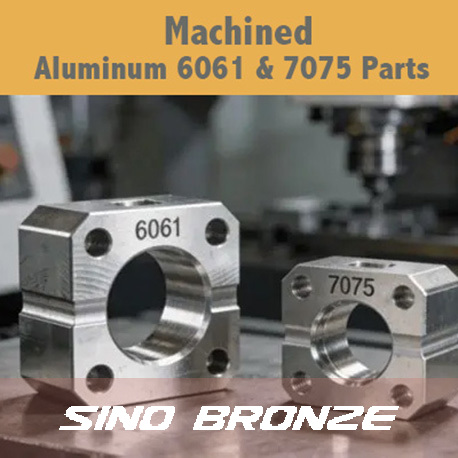
If you are selecting aluminum for structural components, CNC machined parts, bicycle frames, or aerospace fittings, you have almost certainly narrowed your choices down to two grades: 6061 and 7075. These are the two most in‑demand alloys in our factory, and they sit at opposite ends of the performance spectrum. |
| ❶ Side by Side Comparison of Aluminum 6061 & Aluminum 7075 Metals | ||
| Metal Code | 6061-T6 | 7075-T6 |
| Metal Series | 6xxx (Al-Mg-Si) | 7xxx (Al-Zn-Mg-Cu) |
| Chemical Composition Comparison of 6061 & 7075 Aluminum Alloy (Weight %) | ||
 |
||
| Aluminum (Al) | Remainder | Remainder |
| Silicon (Si) | 0.40 - 0.80% | 0.40% max |
| Iron (Fe) | 0.70% max | 0.50% max |
| Copper (Cu) | 0.15 - 0.40% | 1.20 - 2.00% |
| Manganese (Mn) | 0.15% max | 0.30% max |
| Magnesium (Mg) | 0.80 - 1.20% | 2.10 - 2.90% |
| Chromium (Cr) | 0.04 - 0.35% | 0.18 - 0.28% |
| Zinc (Zn) | 0.25% max | 5.10 - 6.10% |
| Titanium (Ti) | 0.15% max | 0.20% max |
| Other (Each) | 0.05% max | 0.05% max |
| Other (Total) | 0.15% max | 0.15% max |
| Property | 6061-T6 | 7075-T6 |
| Snapshot of 6061 & 7075 Aluminum Alloys in Their Most Common Temper | ||
 |
||
| Ultimate Tensile Strength | 310 MPa | 572 MPa |
| Yield Strength | 276 MPa | 503 MPa |
| Elongation at Break | 12–17% | 7–11% |
| Brinell Hardness | 95 HB | 150 HB |
| Density | 2.70 g/cm³ | 2.81 g/cm³ |
| Weldability | Excellent | Very Poor |
| Corrosion Resistance | Good | Moderate (exfoliation risk) |
| Machinability | Good | Excellent |
| Typical Price Premium | Baseline | +30–40% over 6061 |
| Primary Market | General structural | Aerospace / high-performance |
| Summary of Key Differences | 6061 is a magnesium and silicon alloy, resulting in a balanced combination of strength, weldability, and corrosion resistance. | 7075 is a zinc-based alloy, heavily alloyed with copper and magnesium to achieve very high strength, characteristic of aerospace-grade materials. |
❷ Typical Applications and Selectoins on 6061 & 7075 Aluminum Alloys  |
||
| Application | Recommended Alloy | Reason |
| Welded structural frame | 6061-T6 | Weldability essential |
| Aerospace wing spar | 7075-T6 or T73 | Maximum strength-to-weight |
| CNC-machined bracket | 7075-T6 | Better machinability + higher strength |
| Bicycle frame (mid-range) | 6061-T6 | Weldability + good anodizing |
| Bicycle frame (premium) | 7075-T6 | Maximum stiffness-to-weight |
| Marine deck fitting | 6061-T6 | Corrosion resistance required |
| Armor plate | 7075-T6 | Maximum strength (or 7075-T73 for corrosive) |
| Pressure vessel (welded) | 6061-T6 | Must be weldable + post-weld ageable |
| Hydraulic cylinder rod | 6061-T6 hard-anodized | Hard anodize performs better on 6061 |
| Drone frame | 7075-T6 | High strength, CNC-machined |
| Architectural window frame | 6061-T6 | Anodizing quality + formability |
 |
||
|
|
||
| ❸ Different Types of Aluminum Anodizing Available at SinoBronze for Customer Options | |||
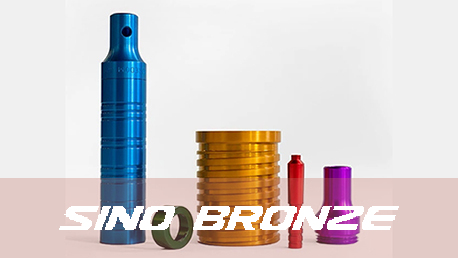
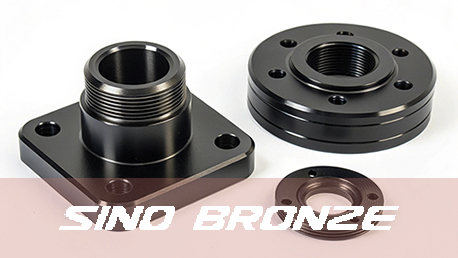
| Types | Type-1 | Type-2 | Type-3 |
| Type Name | Chromic Acid Anodizing | Sulfuric Acid Anodizing | Hard Anodize Anodizing |
| Pictures for reference | 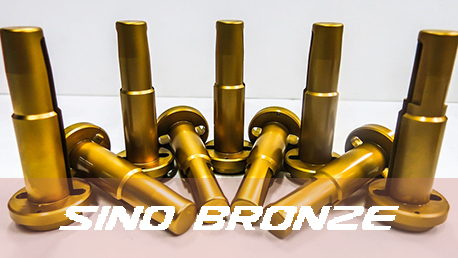 |
 |
 |
| Corrosion resistance | Good | Good | Excellent |
| Wear resistance | Poor | Moderate | Excellent |
| SB Plating Thickness | 0.08-0.25 µm | 2.54-25 µm | 12.7-80 µm |
| Function | Decorative | Decorative + Functional | Corrosion Resistance + High Durability |
| Cost | Low | Moderate | High |
| Tensile Strength | Low | Moderate | High |
| Porosity | Low | Moderate to High | High |
| Appearance | Primary Coat | Clear or Dyed | Hard Clear or Hard Black |
| Environmental Friendly | No | Yes | Yes |
| Electrical Insulation | Good | Moderate | Poor |
| Thermal Resistance | Moderate | Moderate | Good |
| Anti-UV | Poor | Good | Excellent |
| Adhesion for Paint | Poor | Excellent | Moderate |
| Typical Used Colors of Aluminum Anodizing Coatings | |||
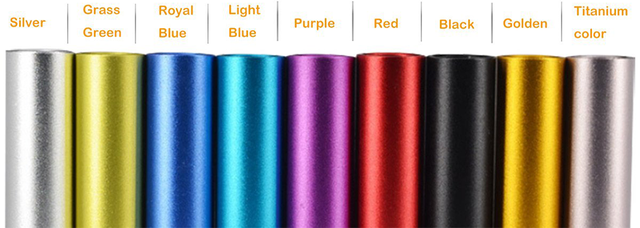 |
|||